



Does Medicare Cover Semaglutide? A Guide for Seniors


On this page
It’s one of the most common questions we hear: will Medicare help pay for semaglutide? The honest answer is that it depends on two things — your specific plan, and the medical reason the medication is prescribed.
Medicare Part D covers FDA-approved semaglutide medications for certain medical conditions. It does not cover compounded semaglutide, and it does not cover semaglutide prescribed only for weight loss. Here’s how that breaks down.
What Medicare covers — and what it doesn’t
Coverage hinges on having a qualifying condition, using an FDA-approved product, and meeting your plan’s requirements.
Medicare may cover semaglutide for:
- Type 2 diabetes. Both an injectable and an oral FDA-approved semaglutide are commonly covered under Part D for managing type 2 diabetes, usually with prior authorization. Monthly copays often run from about $40 to $100 depending on your plan’s tier.
- Cardiovascular risk reduction. A separate, higher-dose FDA-approved semaglutide is covered to reduce the risk of heart attack and stroke — but only for people with established cardiovascular disease who also have obesity or are overweight with related conditions. This requires extensive prior-authorization documentation.
Medicare does not cover:
- Semaglutide prescribed for weight loss alone
- Compounded semaglutide from compounding pharmacies
- Off-label uses, such as prediabetes
- Any generic semaglutide (none is FDA-approved at this time)
Federal law specifically excludes medications prescribed primarily for weight loss, even when a physician prescribes them — so without a qualifying condition, you’d pay full retail price, which can run well over a thousand dollars a month.

Your out-of-pocket costs in 2025
There’s real relief built into recent law. Starting in 2025, once your out-of-pocket prescription costs reach $2,000, you pay nothing more for covered medications for the rest of the year. For people taking covered semaglutide, that cap is often reached within the first two to three months.
The Part D stages work like this:
- Deductible: you pay the full cost until you meet your plan’s deductible.
- Initial coverage: you pay about 25% of the drug cost.
- Catastrophic coverage: after $2,000 in out-of-pocket spending, you pay $0 for covered drugs for the remainder of the year.
This is a significant change from previous years, when out-of-pocket costs for expensive medications had no annual ceiling.
Prior authorization: what your doctor documents
Most plans require prior authorization. Knowing what’s needed can speed approval. For a diabetes indication, that typically means recent A1C results, a documented type 2 diabetes diagnosis with the right codes, a list of medications you’ve already tried, and current labs. For the cardiovascular indication, plans generally want records of a prior cardiac event, a current BMI with documentation, and a clear note that the goal is reducing cardiovascular risk — not weight loss.
If a request is denied, you have the right to appeal — and many initial denials come down to incomplete paperwork rather than true ineligibility, so it’s often worth pursuing.
Step therapy and formulary tiers
Many plans use step therapy, meaning you try less-expensive medications first — often metformin, then another oral class — before a GLP-1 medication is approved. Where a medication lands on your plan’s formulary also affects cost: preferred-brand tiers carry lower copays, while non-preferred tiers can mean higher copays or coinsurance.
A word of caution on cheap “semaglutide” deals
There are no FDA-approved generic versions of semaglutide. Compounded versions exist, but they aren’t FDA-approved and aren’t covered by Medicare. Be wary of online ads promising cheap semaglutide — some involve unsafe products or outright scams that target seniors. It’s worth doing your due diligence and working with a licensed provider and pharmacy.

How MDWatch helps seniors
If you qualify for the new Medicare GLP-1 Bridge, brand-name GLP-1s can be covered for about $50/month. And if you don’t qualify — or prefer a cash option — MDWatch offers a medically supervised compounded alternative built for older adults. A few things set it apart:
- Transparent pricing. If you qualify, brand-name GLP-1s can run about $50/month through the Medicare Bridge Program; otherwise our compounded program is about $90 to $140 for a four-week supply — either way, far less than the retail price of brand-name medications, with no hidden fees, insurance hassles, or prior-authorization delays.
- Real medical oversight. A provider reviews your history, starts you at a low dose, and monitors you with regular check-ins and labs — not just a shipped box of medication.
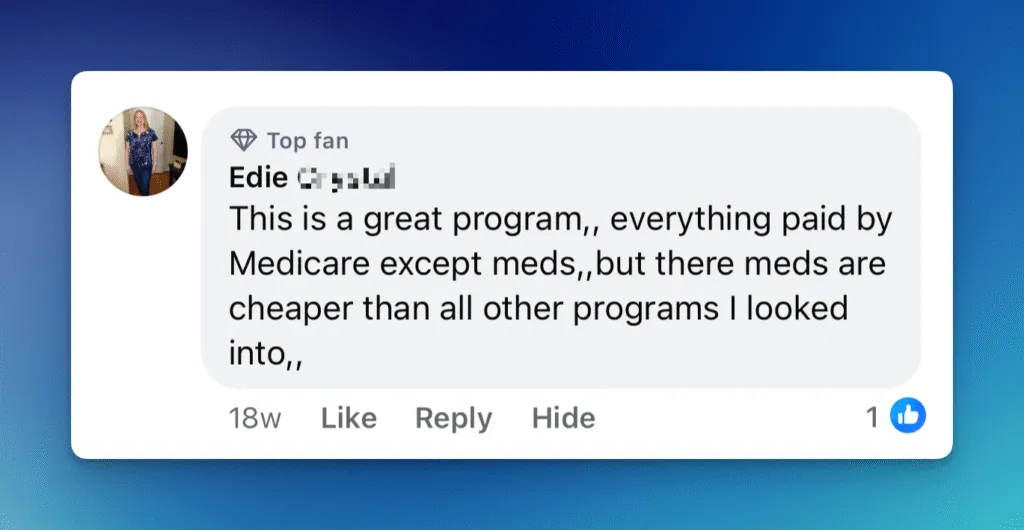
- Care that’s often covered even when the medication isn’t. Medicare frequently helps pay for the visits, coaching, and monitoring around your treatment, even when it doesn’t cover the medication itself.
Whether you qualify for Medicare coverage or need another path, the most important step is knowing your options. Our team can check your specific benefits for free, so you know your exact out-of-pocket cost before you decide anything.
The bottom line
Medicare coverage for semaglutide comes down to two things: which FDA-approved product is prescribed, and the medical reason for it. Coverage is reliable for type 2 diabetes, narrower for cardiovascular risk, and generally absent for weight loss alone. If you don't qualify, it's worth knowing that Medicare often still helps with the care around treatment — and that lower-cost, medically supervised options exist.
Frequently asked questions
Federal anti-kickback law prevents Medicare beneficiaries from using manufacturer coupons or savings programs. It isn't the drug company's choice — it's a federal rule meant to avoid conflicts of interest, which is why discount offers always note they aren't valid for Medicare or Medicaid beneficiaries.
Medicare Part D does not cover medications prescribed solely for weight loss, even FDA-approved ones, unless a qualifying medical condition such as cardiovascular disease is also present.
No. FDA-approved semaglutide is covered only for treating type 2 diabetes — not for prediabetes or diabetes prevention.
No. Medicare only covers FDA-approved medications that carry a National Drug Code. Compounded semaglutide, even when prepared by a licensed pharmacy, doesn't meet that requirement and isn't eligible for coverage.
Medicare Part D covers only FDA-approved uses. Off-label prescriptions — for example, for weight loss or prediabetes — must be paid out of pocket.
Sources
- Medicare.gov — Medicare Part D drug coverage
- HHS / ASPE — impact of the Inflation Reduction Act $2,000 cap
- Medicare.gov — Part D coverage stages and costs
- Drugs.com — FDA-approved semaglutide medications
- U.S. Congress (CRS) — Medicare Part D coverage of GLP-1 drugs
- U.S. FDA — National Drug Code directory
- CMS — step therapy and prior authorization
- Medicare.gov — plan rules and prior authorization
- U.S. FDA — approval to reduce cardiovascular risk in obesity
- NIH / PubMed — metformin as first-line diabetes therapy
- AJMC — Medicare drug price negotiations to include semaglutide
- NIH / PubMed — projected Medicare negotiated price reductions
- The Guardian — proposed Medicare coverage for weight-loss drugs
- CMS — CPT / HCPCS code list
MDWatch Weight-Loss Program
See if a GLP-1 is right for you
Get a personalized plan from board-certified medical providers who treat seniors every day. The medical visit is $0 with most Medicare plans — and there's no obligation to start.
Medicare accepted
You don't have to do this alone
It's all handled from home, with a licensed U.S. care team beside you and Medicare helping cover the cost of care.
- A licensed U.S. care team who knows your name
- Tirzepatide delivered right to your door
- Connected cellular scale to track your weight loss
- Personalized medication adjustments based on your progress
- Upfront pricing and no membership fees

"I've lost over 30 pounds, and I feel amazing."Gabriela Verified patient −30 lbs
Thanks — you're all set.
Our benefits team will review your plan and reach out shortly. Nothing is submitted to Medicare, and there's no obligation.
(Demo mode — no information was sent.)
Free & secure · No obligation · About a minute
What happens after you submit
- Share a few details
- We verify your benefits, free
- Get your personalized plan
Written by

Jacquelyn Will
Health writer · MDWatch
Medically reviewed by
Dr. Terri Riddiford, MD
Board-certified · Reviewed May 28, 2026
Continue reading
All articles

This article is for general educational purposes only and is not medical advice. It should not replace a conversation with a licensed healthcare provider who knows your full medical history. Always talk with your provider before starting, stopping, or changing any treatment.